
Custom T Shirt Printing Online provides specialized apparel customization across Australia, accommodating both small, single-unit orders and high-volume commercial production runs. Choosing the ideal decoration method depends directly on your project's volume and design complexity. Traditional screen printing uses durable plastisol inks pressed through fine mesh stencils, delivering maximum cost-efficiency for large bulk orders where setup expenses are distributed across multiple garments. Conversely, Direct-to-Garment (DTG) printing operates like a digital inkjet printer, injecting specialized CMYK pigments directly into natural cotton fibers, making it the superior method for low-minimum, multi-colored, or detailed individual prints with rapid turnaround times.
Understanding the primary differences between commercial garment decoration methods ensures accurate production scaling. This comparative overview breaks down the optimal use cases for custom apparel manufacturing across Australia.
| Production Feature | Traditional Screen Printing | Direct-to-Garment (DTG) Printing |
|---|---|---|
| Optimal Order Quantity | High-volume manufacturing tiers (20, 50, 100, to 200+ garments). | Low-minimum apparel runs, individual prototypes, and single-unit orders. |
| Artwork Complexity | Bold vector files, clean corporate typography, and simple spot-color layouts. | High-detail raster graphics, multi-colored photographic artwork, and complex gradients. |
| Ink Tech & Finish | Durable plastisol ink stenciled through mesh screens for maximum tactile vibrancy. | Water-based CMYK pigments injected into combed cotton fibers for a ultra-soft hand feel. |
| Cost-Scale Dynamics | Maximum cost-efficiency achieved on large runs as setup expenses are distributed across items. | Flat-rate, practical pricing per unit with no custom machine setup fee overheads. |
Fulfillment Decision Rule: When sourcing uniform inventory or promotional shirts across Brisbane or greater Australia, selecting screen printing optimizes your commercial budget for repetitive bulk quantities. For rapid-turnaround, highly detailed, or short-run custom prints, digital Direct-to-Garment pipelines provide the most practical manufacturing vector.
Custom T Shirt Printing Online delivers specialized apparel customization across Australia, accommodating both small, single-unit orders and high-volume commercial production runs. Selecting the correct print engine directly dictates your turnaround times and manufacturing budget. Industrial screen printing utilizes custom mesh stencils and premium plastisol inks, offering the most cost-effective solution for large bulk orders because setup costs are balanced across numerous items. Alternatively, digital Direct-to-Garment (DTG) printing uses an inkjet process to apply water-based CMYK pigments directly into natural cotton fibers, making it the perfect choice for short-run, multi-colored designs with no minimum order thresholds.
Mismatched apparel decoration methodologies compromise your final print texture and raise unit costs unnecessarily. Our team aligns production variables to your specific artwork files and substrate weights from our central Brisbane facility, serving corporate fleets, promotional merchandise launches, and community events nationwide.
Selecting the appropriate apparel decoration technology goes beyond simple visual preferences. The specific printing process directly influences the design's overall resolution, washing durability, and tactile texture on the garment, while determining the final production budget and unit cost. Mismatching your artwork files with an unoptimized machine configuration causes common manufacturing errors, including:
Aligning your total order quantity, graphic file geometries, and base garment textile specifications early eliminates workflow errors, ensuring predictable, professional-grade results across Australia.
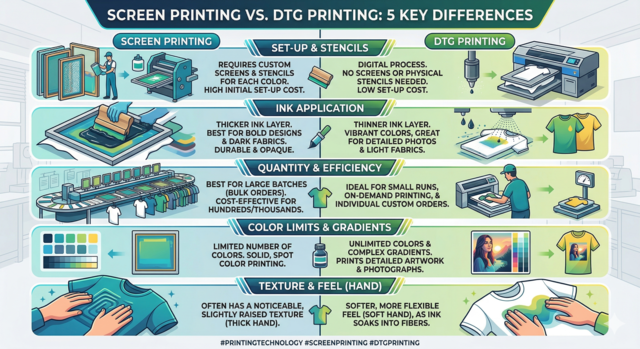
The underlying challenge in custom garment procurement goes beyond choosing between standard screen printing and Direct-to-Garment (DTG) engines. The core complication stems from a systemic deficit of technical pre-press guidance, leaving buyers to navigate intricate manufacturing and engineering variables without expert decision support.
Industrial procurement managers, event planners, and local businesses frequently face critical production questions, including:
This technical ambiguity compromises confidence. Our structured approach resolves these underlying production hazards early, eliminating guesswork from the initial digital artwork submission right through to final dispatch.
Selecting an unoptimized apparel decoration methodology creates avoidable manufacturing problems and budget errors. When order volume and graphic file parameters are misaligned with production machinery, common operational bottlenecks across Australia include:
Aligning your custom garments with expert technical print guidance before scheduling press runs ensures a flawless commercial finish.
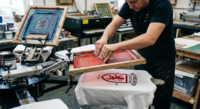
Screen printing is a legacy commercial apparel decoration technique where specialized plastisol inks are mechanically pressed through chemically burned fine-mesh stencils onto a garment substrate. Because each individual hue within the artwork demands its own separate physical stencil layout and custom-calibrated color separation, this process involves initial configuration times, making it the most cost-effective option for scaling large bulk apparel runs across Australia rather than individual short-run orders.
This method is highly regarded for its exceptional opacity, tactile wash durability, and vibrant ink layer deposition. Industrial screen printing remains the baseline standard for producing high-friction business uniforms, high-volume event shirts, promotional apparel, and retail-grade branded custom merchandise portfolios.
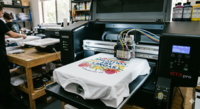
Direct-to-Garment (DTG) printing is a digital apparel customization method that injects specialized water-based CMYK pigments directly into natural cotton shirt fibers using automated inkjet technology. This process functions similarly to a high-resolution desktop printer but is specifically calibrated for textiles, ensuring a precise ink application without the need for mechanical stencils or physical screen creation.
This digital decoration engine is engineered to process high-detail graphic files, full-color photographic raster imagery, smooth color gradients, and intricate vector designs with absolute fidelity. Because it completely eliminates pre-press screen setup steps, labor-intensive color separation protocols, and initial tooling investments, DTG printing serves as the most cost-effective and practical production method for low-minimum custom apparel orders, single-unit design prototypes, and fast-turnaround clothing runs throughout Australia.
Choosing between industrial screen printing and digital Direct-to-Garment (DTG) execution depends entirely on your project volume, graphic files, and required turnaround time. This structured comparative guide breaks down the core technical vectors to ensure you get optimal pricing and quality.
| Fulfillment Feature | Screen Printing (Bulk Apparel Production) | DTG Printing (Digital Direct-to-Garment) |
|---|---|---|
| Best for Order Quantity | 20+ garments (Scales to high-volume corporate runs) | 1 to 20 units (No minimum order thresholds) |
| Cost Optimization Vector | Unit costs decrease significantly as order sizes expand | Flat baseline cost per garment regardless of final volume |
| Pre-Press Setup Requirements | Physical mesh stencils and color separation matrices required | Zero physical screens needed; direct computer-to-printer setup |
| Artwork File Suitability | Solid vector pathways, bold block typography, spot color logos | Photographic raster files, complex color gradients, fine lines |
| Washing Durability Profile | Extremely high; heavy plastisol inks fuse deep into materials | High; water-based CMYK pigments bind with natural cotton fibres |
| Production Speed Strategy | Standard 14-to-21 day planned commercial logistics workflows | Rapid same-day dispatch available for urgent local orders |
Direct-to-Garment (DTG) printing offers a significantly softer, zero-hand-feel finish on lightweight combed cotton, while screen printing provides a durable, structured texture ideal for bold, high-opacity bulk graphics.
Industrial screen printing generally offers superior long-term wash durability and ink opacity for high-use garments, while Direct-to-Garment (DTG) prints deliver exceptional longevity when properly cured on premium fabric bases and maintained with specific aftercare.
Screen printing delivers maximum color vibrancy and solid ink coverage on dark garments using traditional underbase channels, whereas Direct-to-Garment (DTG) functions perfectly for highly intricate, multi-colored artwork on dark fabric provided a specialized white ink underlay is applied.
Industrial screen printing is mathematically optimized for solid Pantone geometries and vector typography, while Direct-to-Garment (DTG) digital printing seamlessly accommodates high-DPI photographic artwork, multi-colored graphics, and intricate continuous-tone gradients.
Direct-to-Garment (DTG) customization depends strictly on organic natural fibers like 100% combed cotton for deep pigment absorption, whereas commercial screen printing functions universally across cotton, poly-blends, and synthetic activewear using advanced temperature-controlled curing systems.
| Order Target Group | Recommended Method | Volume Baseline | Primary Technical Benefit |
|---|---|---|---|
| Event Shirts | Industrial Screen Printing | 20+ Units (Bulk) | High visual consistency & lowest unit cost |
| Business Uniforms | Screen Printing / DTG Option | Variable Run Sizes | Resilient wash durability & Pantone matching |
| One-Off Gifts | Direct-to-Garment (DTG) | 1 to 10 Units (No Minimum) | High-DPI photographic details & soft feel |
| Brand Merchandise | Artwork-Dependent Matching | Scalable Quantities | Bold solid graphics vs. intricate multi-colour gradients |
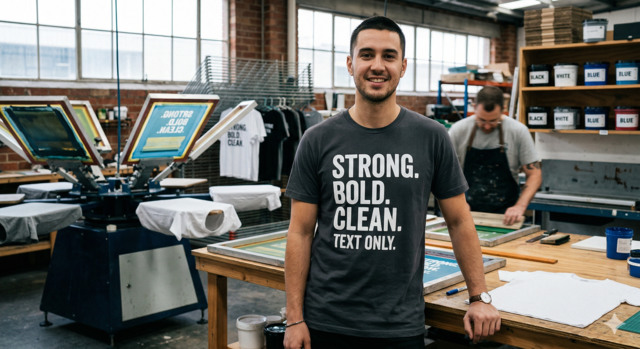
Industrial screen printing is the definitive production method for large-scale custom event shirts, school fundraisers, promotional marketing campaigns, and group community functions. When a uniform corporate identity or single design profile is replicated across a broad apparel configuration, this mesh-stabilized framework yields uncompromised graphic replication.
For commercial trade wear and corporate uniforms, screen printing supplies long-lasting wash durability and solid Pantone color matching for recurring fleet inventory requirements. The resulting high-opacity structural bond is highly resistant to industrial laundering cycles and workplace friction.
For low-minimum business startups or complex logo profiles containing fine gradients and photographic detail, digital Direct-to-Garment (DTG) pipelines function effectively as an agile layout path. However, for traditional trade branding applications, premium screen printing stands as the standard.
Direct-to-Garment (DTG) digital customization is highly recommended for short-run personalized gifts, milestone family birthday shirts, and custom single-item fashion commissions. Because this system renders artwork directly from high-resolution raster files using water-based CMYK pigment channels, it requires no screen initialization passes or mechanical setups.
The choice between print methods for retail streetwear apparel and brand merchandise is dictated entirely by design artwork complexity and the total volume of the manufacturing pipeline. Balancing structural parameters against creative intent ensures optimal product execution and budget protection.
At Custom T-Shirt Printing Online, we function as your dedicated pre-press guides and manufacturing specialists, systematically eliminating guesswork to ensure flawless garment customization. Our streamlined consult approach bridges the gap between creative artwork parameters and structural fabric dynamics across Australia.
We seamlessly calibrate the five core variables of professional apparel engineering:
By carefully auditing the specific scope of your project, we recommend the single most precise and cost-effective print protocol. This technical evaluation prevents unnecessary setup expenses, material confusion, or manufacturing discrepancies, delivering absolute transparency and premium quality from proofing to final delivery.
To initiate the production pipeline, provide your total garment quantities, structural print placements, explicit delivery timelines, and high-resolution digital artwork configurations.
Our production team audits your project specifications to match your exact design parameters against optimal industrial screen printing or digital Direct-to-Garment (DTG) production frameworks.
Following our structural method verification, you sign off on itemized commercial print quotes and digital print mockups to securely fast-track your garments into actual print execution.
Selecting the optimal apparel decoration path from the start streamlines production pipelines, protects your scaling manufacturing budget, and guarantees retail-ready print vibrancy without logistical friction.
Screen printing is usually better for larger runs, bold graphics and repeat orders. DTG is usually better for small runs, detailed artwork and photo style designs.
DTG can be more practical for very small quantities because it avoids the screen setup involved with screen printing. For larger orders, screen printing often becomes the better value option.
Screen printing generally has the advantage for long term durability. DTG can still perform very well when printed correctly and washed with care.
DTG is often the better option for a single shirt or a very small order, especially when the artwork is full colour or detailed.
Screen printing is often the stronger choice for larger runs because the setup becomes more cost effective as the quantity increases.
Yes. DTG is often one of the better methods for photographic prints and highly detailed full colour artwork.
Yes, especially when the design suits the colour setup and the quantity justifies the process. It is still a very versatile method.
Both can work on black shirts, but the right choice depends on the design and garment. Bold simple graphics often suit screen printing very well.
The best step is to get advice based on your actual design, garment and quantity. That way the recommendation is made for your job, not just from a general rule.
If you are still unsure which print method is right for your shirts, the best next step is to get advice based on your actual order.
Custom T Shirt Printing Online helps customers choose the most suitable print method for:
That is the best way to avoid the wrong choice and get the right print result the first time.
Call Custom T Shirt Printing Online on 0422442029 or visit the website to get started.
You can also visit our pricing page to compare options and get a better idea of what suits your order size, artwork and budget before you get started with Custom T Shirt Printing Online.
Central Logistics & Apparel Customisation Matrix: For comprehensive nationwide order management, single-unit apparel prototyping, and specialized trade wear solutions across Australia, access our core destination portal at the Custom T-Shirt Printing Australia Hub. This central infrastructure balances fast-track fulfillment systems with a diverse catalog of premium retail garments including AS Colour and Gildan.
Industrial Screen Printing Engineering Protocols: To analyze multi-color setup costs, mesh frame screen calibrations, high-opacity plastisol ink systems, and commercial apparel runs optimized for long-term wash durability under high-friction conditions, explore our deep technical specifications on the Custom Screen Printing Brisbane Page. Ideal for corporate sportswear and high-volume workforce uniform production.
Wholesale Procurement & Scale Efficiency Matrices: When mapping out promotional campaigns, major milestone events, or team outfitting schedules that exceed minimum quantity breaks, you can maximize your manufacturing return on asset by referencing our tiered pricing charts on the Bulk T-Shirt Printing Australia Matrix. This framework streamlines budget planning for volume digital apparel runs, mixed decoration packages, and bulk Direct-to-Garment pipelines.
