>
>
Screen Printing vs DTF Printing (Direct-to-Film)

Choosing between screen printing and DTF printing can feel harder than it should be. You want your shirts to look great, last well and fit your budget, but the right method depends on your artwork, your garment choice, your order size and how fast you need the job completed. For many buyers, the problem is not just printing — it is knowing which process will give the best result without wasting money or ending up with shirts that do not match expectations. At Custom T Shirt Printing Online, we help customers across Brisbane and Australia compare screen printing vs DTF printing with real world advice. Whether you are organising event shirts, workwear, promotional tees, club apparel, staff uniforms or branded merchandise, we guide you toward the method that suits your design and your order. That means less confusion, less risk and a clearer path to getting custom printed shirts that look right and feel right.
Screen printing and DTF (Direct-to-Film) are both popular options for custom t-shirt printing. They can both produce professional results, but they’re designed for different situations depending on quantity, artwork type, and turnaround time.
This page explains the key differences so you can choose the best option for your order.
Screen printing is usually the better choice for bulk orders, simple bold artwork and repeat runs where consistency matters. DTF printing is usually the better choice for smaller runs, full colour designs, fine detail and jobs where flexibility matters more than volume. If you are ordering a large batch of shirts with the same design, screen printing often gives better long term value. If you need a short run with detailed artwork or multiple colours, DTF printing is often the more practical option.
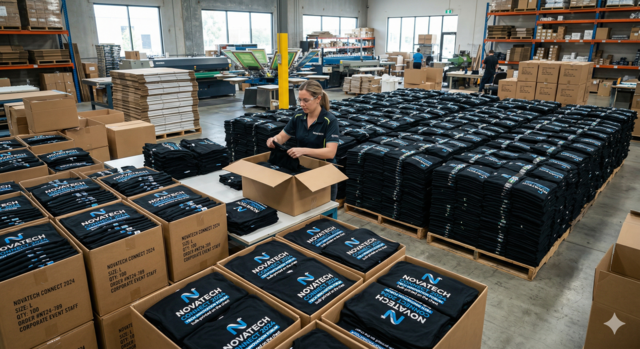
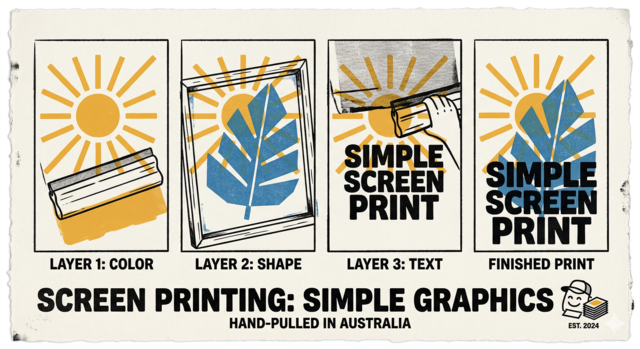
Screen printing is a traditional t shirt printing method where ink is pushed through a stencil screen onto the garment. Each colour in the design is applied separately, which makes this method ideal for bold logos, text based graphics and repeat artwork across larger quantities. Screen printing is popular because it produces strong, vibrant prints and is well suited to bulk orders. For business uniforms, event shirts and promotional campaigns, it remains one of the most trusted methods for achieving clean and durable results at scale.
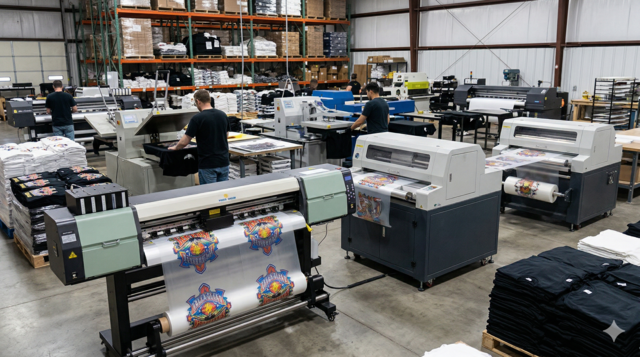
DTF stands for direct to film printing. With this process, a design is printed onto a special film and then heat transferred onto the garment. It allows for high detail, full colour prints and works well on a wide range of garment types. DTF printing is especially useful when the artwork includes gradients, shadows, fine detail or multiple colours. It is often chosen for smaller quantities because it avoids some of the setup involved in traditional screen printing.
| Feature | Screen Printing | DTF Printing |
|---|---|---|
| Best for | Bulk orders, repeat jobs, simple logos | Small runs, detailed artwork, full colour designs |
| Ideal quantity | Usually better for medium to large runs | Usually better for short runs and one offs |
| Artwork style | Bold graphics, text, simple shapes, spot colours | Detailed artwork, gradients, fine lines, photo style prints |
| Print feel | Often softer and more integrated depending on ink and garment | Can feel slightly more layered on the garment |
| Durability | Very strong for bulk apparel and repeat branded work | Durable when applied properly and cared for correctly |
| Setup | More setup required, especially with multiple colours | Less setup for short run jobs |
| Cost efficiency | Better value as quantities increase | Better value for low quantity jobs |
| Fabric flexibility | Excellent on many common cotton garments | Strong across cotton, blends and many mixed garment options |
| Repeat orders | Excellent for repeat business and event runs | Good for short term flexibility and varying designs |
| Best use cases | Staff uniforms, event shirts, school shirts, club orders | Samples, artist merch, small business runs, detailed prints |
For a real product example, visit our custom printed tote bags page to see when DTF works best from 10 bags and when screen printing suits larger orders.
If you are printing a large number of shirts with the same artwork, screen printing is often the smarter option. The setup makes more sense when spread over a bigger run, which helps improve value as quantities increase.
Screen printing is ideal for logos, wording and clean design elements that do not rely on complex gradients or photo effects. It gives a crisp, professional result that suits uniforms, events and promotional shirts.
If you are likely to reorder the same design later, screen printing can be an excellent long term option. It suits businesses, schools, clubs and teams that need consistent branding across multiple orders.
For charity events, festivals, school functions and company promotions, screen printing is often a reliable choice. It works particularly well when you need a strong visual result across a full group of matching garments.
When a business wants the same logo placement and colour treatment repeated across a large batch, screen printing helps create a consistent finish. This matters for uniforms, customer facing staff and professional branding.
Screen printing is well known for strong wash durability, which is one reason it remains a popular choice for bulk orders, uniforms and event shirts. When applied properly and cared for correctly, screen printed designs can hold up very well over time, making them a reliable option for garments that will be worn and washed regularly.
DTF is often better when you only need a few shirts rather than a large batch. It gives buyers flexibility without requiring the same setup process that makes screen printing stronger at higher quantities.
If your design includes shadows, gradients, photographic elements or many colours, DTF is often the better option. It allows more detail to be transferred onto the shirt without breaking the artwork into separate colour screens.
DTF is helpful when you want to test a design before committing to a larger production run. This can be especially useful for brands launching a new graphic or event organisers trialling a design concept. If you are testing a design first, DTF can be a smart entry point before moving to screen printing for a larger reorder.
If your order includes a mix of shirt types, colours or garment styles, DTF can offer more flexibility. That makes it useful for smaller brand runs or custom apparel orders where uniformity of garment is not the top priority.
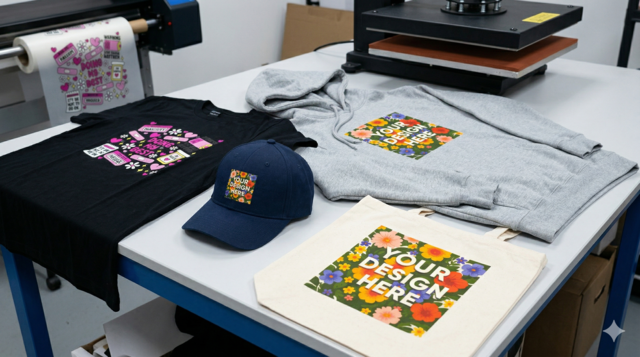
For lower quantity orders that need detail and speed, DTF can be a practical solution. It helps simplify production for artwork that would be less efficient to produce through traditional screen printing.
DTF printing can offer good wash durability when the design is applied correctly and the garment is cared for properly. It is a reliable option for many custom t shirt orders, especially short runs and detailed prints, but washing instructions should be followed to help protect the print quality over time.
The answer depends on the artwork. Screen printing often looks best when the design is simple, bold and built around solid colours. It gives a classic printed finish that works well for logos, text and strong graphic shapes. DTF often looks better when the artwork is detailed, colourful or includes effects that are difficult to reproduce through spot colour screen printing. If your design relies on image detail or complex colour variation, DTF may give a closer visual match to the original file.
Screen printing has long been trusted for durability, especially on bulk apparel that gets repeated wear. It is a strong option for uniforms, staff shirts and event apparel where longevity matters. DTF can also be durable when applied properly and cared for correctly. The key is making sure the right process is matched to the right garment and the design is prepared well from the beginning.
Screen printing is often preferred for buyers who want a more traditional print finish on the garment. Depending on the design and ink load, it can feel softer and more integrated with the fabric. DTF can feel slightly more noticeable on the shirt because the design is transferred as a printed layer. For many customers this is perfectly fine, but if print feel is a major concern, it is worth discussing before production starts.
Screen printing performs very well on cotton shirts and remains one of the most common methods for cotton based bulk apparel. It is often the first choice for business tees, event shirts and promotional cotton garments.
DTF can be a strong option when the order includes more varied fabric types. This is helpful when buyers want flexibility across different garments rather than one standard cotton shirt style.
For blended shirts, the decision usually comes down to the artwork, quantity and intended use. This is where getting advice from an experienced printer matters because the print method should suit both the design and the garment.
For low quantity jobs, DTF is often the more practical investment because it does not rely on the same setup process as screen printing. That makes it attractive for short runs, one off pieces and highly detailed artwork where only a few garments are needed. For larger runs, screen printing often becomes the better value option. Once the setup is spread across more garments, the per shirt investment can become more competitive, especially for simple repeat designs.
Yes, in many cases you can use both methods as part of the same ordering strategy. DTF printing is often a smart choice for first samples, test designs or short trial runs because it gives you flexibility without needing a large quantity. Once the design is approved and you are ready to place a bigger repeat order, screen printing often becomes the better option for scaled-up runs because it is usually stronger for bulk quantities, simple repeat artwork and long term value.
The best print method depends on what you are ordering, how many garments you need and how detailed the artwork is. For Brisbane businesses, events and clubs, screen printing is often better for larger matching orders, while DTF printing is often better for smaller runs and more detailed full colour designs.
Many buyers are not sure which garment to choose, what shirt colour works best with their design, how large the print should be or what artwork file will produce the best result. That is normal. The problem is that getting those decisions wrong can lead to wasted money, delays and shirts that do not match the vision you had in mind. That is why working with a guide matters. At Custom T Shirt Printing Online, we help customers compare options before they commit so they can move forward with confidence. Instead of guessing, you get advice based on the design, the quantity, the print areas and the intended use of the garments.
A tailored quote is best for customers with larger orders, multiple print areas, detailed artwork, special garment requests or tighter deadlines. It is also the right option if you need help choosing the best print method, want artwork adjusted or need delivery or pickup arranged. By emailing for a tailored quote, you can get clearer advice and a more accurate price based on the exact details of your custom t shirt order.
Cart checkout is usually best for smaller and straightforward orders where you already know the garment, the print option and the quantity you need. A custom quote is the better option for larger orders, complex artwork, multiple print areas, special garment requests or jobs that need tailored advice on the best printing method, turnaround or delivery options.
You can start with a simple concept or a print ready file. We look at the artwork, the quantity, the garment type and your timeframe so we can recommend the best path forward.
Small simple orders may be suitable for online checkout. Larger or more complex orders are better handled through a tailored quote so the right print method, print areas, artwork needs and turnaround can be assessed properly.
Once the quote is approved, mockups are prepared for review. After approval and payment, the job moves into production so your garments can be completed to the agreed plan.
Once your quote is approved, we move to the next stage by preparing mockups for your review. This gives you a chance to check the garment choice, print placement, sizing and overall look before production begins. After the mockup is approved and payment is completed, your order moves into production so your custom printed shirts can be made to the agreed plan.
Custom T Shirt Printing Online is based at 12 Mumbil Street, Stafford Heights in Brisbane, making it easy for local customers to work with a trusted printer that understands the needs of businesses, schools, clubs and event organisers across the city. We are a national printer for both simple and complex orders and able to ship Australia-wide, so whether you are in Brisbane, regional Queensland, Sydney, Melbourne, Adelaide or Perth, you can still order custom printed shirts with confidence and have them delivered to your location.
Screen printing is better for some jobs and DTF is better for others. Screen printing is usually the stronger choice for larger bulk runs and simple repeat artwork, while DTF is often better for short runs and detailed full colour designs.
For small quantities, DTF is often the lower investment option because it avoids some of the setup that makes screen printing stronger at larger volumes. For bigger runs, screen printing often becomes better value.
Screen printing has a long standing reputation for durability, especially in uniform and event applications. DTF can also perform well when applied properly and cared for correctly, but the best choice still depends on the garment and design.
Screen printing is usually better for bulk t shirt printing, especially when the design is the same across all garments. It is a trusted option for staff shirts, school shirts, event orders and repeat business apparel.
DTF is usually better for detailed artwork because it handles colour variation, gradients and fine detail more easily. If your design is complex, DTF may reproduce it more accurately.
Yes, DTF is often a good choice for one off shirts and short runs. It gives flexibility for small quantity custom work without the same setup needed for screen printing.
That depends on the quantity, the garment and the logo style. For larger business uniform orders with simple branding, screen printing is often the stronger option.
The best step is to ask for guidance before placing the order. At Custom T Shirt Printing Online, we can review the job and point you toward the print method that suits your design, garment and quantity.
Need help choosing between screen printing and DTF printing for your next order? Speak with Custom T Shirt Printing Online and get clear advice before you commit. We help customers in Brisbane and across Australia compare shirt options, print methods and order pathways so they can get the right result at the right investment. For simple orders, you may be able to order online. For larger or more detailed jobs, it is best to request a tailored quote so we can recommend the best print method for your artwork, garment and quantity. Call 0422 442 029 or visit Custom T Shirt Printing Online to get started.
If you are comparing print methods because you are planning a larger order, you may also want to review our screen printing service page and our t shirt printing pricing information. These pages can help you understand which method suits bulk orders best and what factors affect the final investment for custom printed shirts.
