
Custom embroidery services create durable, professional branding on polos, jackets, hoodies, uniforms, workwear and suitable caps by stitching a digitised logo directly into the garment with coloured thread.
Embroidery is commonly chosen for corporate uniforms, hospitality clothing, trade workwear, sporting clubs, schools and branded staff apparel because the stitched design has a premium appearance and withstands regular washing. Unlike printed graphics, an embroidered logo does not rely on ink sitting on the fabric surface, making it suitable for garments that need to be worn frequently.
Polos, jackets, hoodies, work shirts, uniforms and structured caps generally provide the stable fabric needed to hold embroidered stitching. Lightweight T shirts and very thin fabrics may not suit large or highly detailed embroidery because the weight of the thread can pull, distort or wrinkle the material. Our team can recommend the right garment, embroidery size and placement before production begins.
Embroidery pricing is usually based on the number of garments, logo dimensions, stitch count, thread colours and placement. A dense or detailed logo requires more stitches and takes longer to produce than a simple business name or small chest logo. A one-time digitising investment may also apply when artwork must be converted into an embroidery-ready stitch file.
Vector files such as AI, EPS or print-ready PDF files produce the best results. High-resolution PNG files may also be assessed. Small lettering, gradients and photographic details may need to be simplified so the embroidered logo remains clear and readable.
Choosing the wrong garment, logo size or artwork format can lead to distorted stitching and unnecessary costs. Custom T Shirt Printing Online reviews your quantity, garments, logo, placement and required date before recommending the most suitable embroidery solution.
Call Custom T Shirt Printing Online on 0422 440 029 to discuss embroidered polos, jackets, hoodies or uniforms and receive a tailored quote.
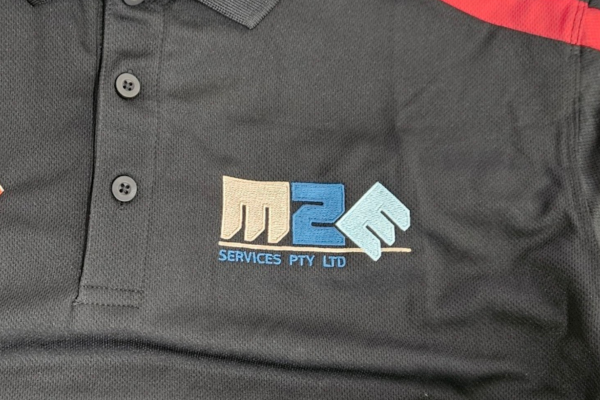
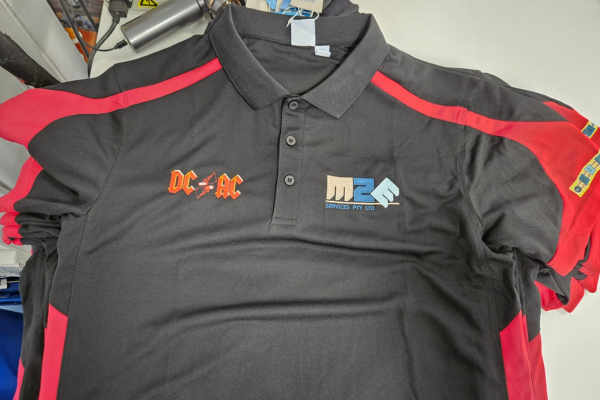
Embroidery is a garment decoration method that uses a computer-controlled machine to stitch a logo, business name or design directly into fabric with coloured thread. It creates a professional, textured finish that is commonly used for corporate uniforms, workwear, polo shirts, jackets, caps, hoodies and hospitality clothing.
Unlike screen printing, DTF printing or direct-to-garment printing, embroidery does not apply ink or transfer film to the surface of the garment. The thread becomes part of the garment, which helps the design withstand regular washing, workplace use and repeated wear. This makes embroidered clothing a suitable choice for businesses that need durable uniforms with consistent branding.
A common problem is choosing a design that contains too much detail, very small lettering or colour gradients. These elements may look clear on a computer screen but can become difficult to reproduce with thread. The artwork usually needs to be simplified and converted into a digitised embroidery file that tells the machine the stitch type, direction, density and thread sequence.
The best result depends on the garment fabric, logo dimensions, stitch count, thread colours and placement. Custom T Shirt Printing Online can review your artwork, recommend a suitable garment and prepare the design correctly for embroidery. Call Claude on 0422 442 029 to discuss your embroidered workwear or uniform order and receive a tailored quote.
Customers choose embroidery because it creates a professional, durable and premium finish for business uniforms, workwear and branded apparel.
Unlike surface printing, embroidery uses coloured thread stitched directly into the garment. This gives company logos, staff names and business branding a raised, textured appearance that is suitable for workplaces where presentation and consistency matter.
Embroidered logos generally withstand frequent washing and regular workplace use when the garment, thread and embroidery design are selected correctly. This makes embroidery a practical option for polo shirts, button up shirts, jackets, hoodies, aprons, caps and selected high visibility workwear.
Embroidery works best for logos with clear shapes, readable lettering and a manageable level of detail. Very small text, fine gradients and photographic images may need to be simplified before the design is converted into an embroidery stitch file.
Choosing the wrong garment or embroidery size can cause puckering, unreadable lettering or an uncomfortable finish. Custom T Shirt Printing Online can recommend suitable garments, logo dimensions, placement and artwork preparation before production begins.
For professional embroidered uniforms and branded workwear, contact Custom T Shirt Printing Online on 0422 442 029 to discuss garment quantities, logo artwork, required placements and your delivery date.
The best garments for embroidery are polos, jackets, softshells, hoodies, workwear, uniforms and heavier cotton garments because their stable fabric supports the weight and structure of embroidered stitches.
Choosing the wrong garment can cause the fabric to wrinkle, stretch or pull around the embroidered logo. This is particularly common with very thin T-shirts, lightweight activewear and loose fabrics that cannot support dense stitching. The garment, artwork size, thread count and embroidery placement should therefore be assessed together before production begins.
Large full-colour photographs, gradients, tiny lettering and highly detailed artwork are generally unsuitable for embroidery. Small text may close up when stitched while excessive detail can create a heavy, uncomfortable embroidered area.
Where necessary, the artwork can be simplified, text can be enlarged or stitch density can be reduced. DTF printing or DTG printing may be recommended when the design contains photographic detail, colour gradients or fine lines.
Custom T Shirt Printing Online can review your garment and artwork before printing and recommend the most suitable decoration method. For advice on embroidered polos, workwear, jackets, caps or event apparel, call Claude on 0422 442 029 and request a tailored quote.
Embroidery pricing is calculated mainly from the stitch count, logo dimensions, number of embroidery positions, garment type and the digitising required to convert your artwork into a production-ready embroidery file.
Unlike screen printing, DTF or DTG printing, embroidery uses thread to sew a logo directly into the garment. A detailed design with small lettering, multiple colours or a large coverage area normally requires more stitches and more production time. This is why two logos of the same physical size may have different embroidery costs.
An accurate embroidery quote requires the garment quantity, logo width and height in centimetres, embroidery locations, garment style and usable artwork. Supplying these details helps prevent unclear pricing, unsuitable garment choices and unexpected production changes.
Custom T Shirt Printing Online can review your logo, recommend an appropriate embroidery size and help you choose garments that suit the design and intended use. Call 0422 442 029 to discuss your embroidered uniforms, polos, caps or workwear and receive a tailored quote before production begins.
The most common embroidery placement options are the left chest, right chest, sleeve, back neck and large back of a shirt, polo, jacket or workwear garment.
Left chest embroidery is the standard choice for business uniforms, staff polos, corporate apparel and trade workwear because the logo remains visible without dominating the garment. A finished embroidery size of approximately 8 cm to 10 cm wide usually provides a professional balance between readability, stitch count and cost.
Right chest embroidery is commonly used for employee names, job titles, qualifications or secondary branding. It can also be used for a company logo when the left chest is reserved for another emblem.
Sleeve embroidery works well for sponsor logos, department names, website addresses and secondary brand marks. The available print area is smaller, so simple artwork and limited wording normally produce the cleanest result.
Back neck embroidery is a discreet premium branding option positioned below the collar. It is best suited to small logos, symbols or short brand names.
Large back embroidery creates a prominent result on jackets, hoodies and heavy workwear, but it requires more stitches, longer production time and a higher investment.
The most cost-effective standard option is usually a chest logo measuring up to approximately 10 cm × 10 cm.
The best artwork for embroidery is a clear, simplified logo supplied in vector format or as a production-ready EMB or DST embroidery file.
Embroidery machines reproduce artwork with thread rather than ink, which means photographic gradients, soft shadows, tiny lettering, extremely fine lines and complex colour blending may not stitch clearly. Small text may need to be enlarged and detailed logos may need to be simplified before digitising.
Vector files such as AI, EPS or editable PDF files allow the artwork to be adjusted accurately. A high-resolution PNG may also be assessed, although it must usually be converted into an embroidery stitch file before production.
If your logo contains photographs, detailed shading or many colours, DTF printing may provide a sharper full-colour result. Custom T Shirt Printing Online can assess your artwork, recommend the correct placement and advise whether embroidery or DTF printing is better for the garment.
For practical advice or an embroidery quote, call Custom T Shirt Printing Online on 0422 442 029.
| Feature | Embroidery | DTG/DTF Printing |
|---|---|---|
| Best for | logos, uniforms | full colour artwork |
| Look & feel | premium stitched | printed ink/transfer |
| Works on | polos, hoodies, jackets | tees, hoodies, mixed garments |
| Colour detail | limited by thread | unlimited full colour |
| Long term durability | excellent | excellent with correct care |
If you want a uniform-grade finish → embroidery is usually best.
To order custom embroidery, provide your garment requirements, quantity, size breakdown, logo dimensions, embroidery placement, artwork file, required completion date and delivery or pickup preference.
Embroidery orders require accurate information because the final price and production method depend on the garment fabric, logo complexity, number of thread colours, embroidery size and estimated stitch count. Missing details can delay quoting, artwork preparation and production.
Send the following details to Custom T Shirt Printing Online:
Accurate embroidery specifications help prevent logos being produced at the wrong size, positioned incorrectly or applied to unsuitable garments. For practical garment advice and a tailored embroidery quote, contact Custom T Shirt Printing Online on 0422 442 029.
Choosing embroidery for business polos can feel confusing when you need the logo to look professional, the garment to feel premium and the order to be ready for an event deadline. This is especially true when your artwork is not print-ready or needs to be recreated from old shirt photos.
See how Custom T Shirt Printing Online helped M2E Services in Mackay with left and right chest embroidery, DTF sleeve prints and large back prints on premium polos and event shirts.
Read our premium embroidered polos and DTF printed event shirts case study
Embroidery pricing is calculated according to the design’s stitch count, the number of garments, the embroidery location and the garment selected for the order.
Displayed embroidery prices should therefore be treated as general guides rather than fixed quotes. A small left chest business logo with simple lettering may require fewer stitches than a detailed multicolour design covering a large section of a polo, jacket or work shirt. The higher the stitch count, the longer the embroidery machine must operate and the greater the production investment is likely to be.
The main pricing factors include logo complexity, finished embroidery dimensions, thread colours, garment quantity and placement. Common locations include the left chest, right chest, sleeves, caps and the upper back. Thick workwear, structured caps and certain jackets may also require different stabilisers, frames or production settings.
Embroidery digitising converts a logo or graphic into a machine-readable stitch file. The process defines stitch direction, stitch density, underlay and thread sequence so the design can be embroidered accurately onto the selected garment. Digitising is generally a one-time investment for each approved design, provided the logo size and application remain suitable.
Repeat orders normally do not require the same design to be digitised again when the existing embroidery file can be reused. Changes to the logo, embroidery dimensions, small lettering or garment application may require the file to be adjusted or recreated.
Choosing embroidery without confirming these details can result in unclear pricing, poor logo definition or lettering that is too small to stitch cleanly. Custom T Shirt Printing Online can review your artwork, garment choice, quantity and required placement before providing an accurate quote.
Call 0422 442 029 to discuss your embroidered polos, work shirts, uniforms, jackets or caps with Custom T Shirt Printing Online.
Embroidery prices depend on factors such as stitch count, logo size, garment type, embroidery placement and the number of items being ordered. Review our custom embroidery pricing guide to understand what affects the final investment before requesting a quote.
Realistic pricing examples can help you estimate the likely investment for embroidered polos, work shirts, caps, jackets and uniforms. See our embroidery pricing examples to compare common quantities, placements and logo applications.
A successful embroidery order requires confirmed garment quantities, sizes, colours, logo placement, artwork and delivery timing. Follow our step-by-step embroidery ordering process so the correct details can be checked before production begins.
Customers often ask about minimum quantities, digitising, thread colours, logo sizes, turnaround times and suitable garments. Visit our custom embroidery FAQs for clear answers to the most common ordering and production questions.
Embroidery, DTG, DTF and screen printing produce different finishes and suit different garments, artwork styles and order quantities. Use our embroidery versus DTG, DTF and screen printing comparison to identify the most suitable decoration method for your project.
Artwork that looks suitable on a screen may need adjustment before it can be converted into clean, durable stitches. Read our embroidery artwork guidelines to learn about file formats, logo detail, lettering size, colours and digitising requirements.
Correct washing, drying and ironing practices help protect the thread, garment fabric and shape of an embroidered logo. Follow our embroidery care instructions to help your branded polos, uniforms, caps and workwear last longer.
Embroidery provides a raised, professional finish while screen printing is often suited to larger designs and higher-volume shirt orders. Compare embroidery versus screen printing to decide which method best suits your logo, garment, quantity and intended use.
Embroidery is commonly selected for business logos and uniforms while DTG is better suited to detailed, full-colour artwork printed directly onto cotton garments. Read our embroidery versus DTG printing guide to compare appearance, artwork suitability, durability and garment options.
Embroidery creates a textured stitched finish while DTF can reproduce detailed, colourful graphics across a wide range of garment fabrics. Use our embroidery versus DTF printing comparison to determine which method is more suitable for your logo, design detail, budget and garment selection.
An embroidery calculator can provide an initial estimate based on garment quantity, logo size, stitch requirements and decoration placement. Try our embroidery pricing calculator before requesting a confirmed quote for your order.
The cost per embroidered garment can change as the order quantity increases because setup and production requirements are distributed across more items. Review our embroidery pricing ladder to understand how different quantity levels may affect your overall order investment.
A confirmed embroidery quote should account for your garment choice, quantity, sizes, logo dimensions, stitch count, placement, artwork preparation and required delivery date. Submit an embroidery quote request so Custom T Shirt Printing Online can assess the complete job and recommend the right production approach.
